Louisiana regulatory summary
| Topic | Status | What it means for IV therapy |
|---|---|---|
| Corporate Practice of Medicine | Moderate | Louisiana’s medical corporation statutes limit ownership of a corporation practising medicine to licensed physicians, but enforcement against outpatient models is moderate. Lay investors typically contract with a physician-owned corporation through a management company.Louisiana Medical Corporation Act (La. R.S. 12:901 et seq.) |
| NP practice authority | Reduced | APRNs prescribe under a collaborative practice agreement with a physician, with LSBN rules setting what the agreement must contain.La. R.S. 37:911 et seq. (Nurse Practice Act); LSBN APRN rules |
| RN IV administration & delegation | Order required | RNs administer IV therapy on the order of an authorized prescriber. LSBN expects the RN to have documented competence and to decline orders that lack a prescriber assessment.Louisiana State Board of Nursing scope of practice rules |
| Good Faith Exam / telehealth | Standard | A prescriber must assess the patient before ordering; LSBME telemedicine rules accept remote encounters that meet the in-person standard of care with a Louisiana licence.Louisiana Medical Practice Act (La. R.S. 37:1261 et seq.) |
| Board of Pharmacy & USP <797> | Standard | The Louisiana Board of Pharmacy regulates sterile compounding and out-of-state pharmacies shipping into the state. Clinic mixing should stay within USP <797> immediate-use limits.Louisiana Pharmacy Practice Act (La. R.S. 37:1161 et seq.) |
| Nurse Licensure Compact | Member | Louisiana shares the compact with Texas, Mississippi and Arkansas, all of its neighbours.Nurse Licensure Compact (NCSBN) |
| LPN scope | Separate board | Practical nurses are licensed by a separate board, the Louisiana State Board of Practical Nurse Examiners, which sets its own IV therapy limits.Louisiana State Board of Practical Nurse Examiners |
Practice setup at a glance
| CPOM tier | Moderate CPOM |
|---|---|
| Typical entity structure | Physician- or NP-owned PC/PLLC; MSO common for non-clinical investors |
| NP practice authority | Reduced (collaborative agreement) |
| Medical director retainer | $900–$1,600 per month (hydration/vitamin menu to NAD+/multi-nurse fleet) |
| Good Faith Exam | Prescriber order after a documented GFE; telehealth accepted, renewal per medical director protocol · $27–$35 per telehealth clearance |
| Pharmacy enforcement | Standard: USP <797> immediate-use limits and 503B/503A sourcing apply |
| Nurse Licensure Compact | Compact member |
Practice setup blueprint in Louisiana
A Louisiana IV practice is usually a physician-owned medical corporation or LLC, or a service line of an existing practice, with an APRN or physician performing exams and RNs administering. RN and investor founders typically own a management company that supplies the brand, vehicles and booking platform under a fair market value agreement, as described in the PC-MSO guide.
Louisiana retainers run about $900–$1,600 per month. A physician who also serves as collaborating physician for your APRN will charge more for that oversight; the medical director guide explains how to separate the two roles in the contract.
| Line item | Louisiana benchmark | Notes |
|---|---|---|
| Entity | Physician-owned corporation; MSO for investors | No lay control of clinical decisions |
| Medical director | $900–$1,600/mo | More if also collaborating with an APRN |
| Telehealth GFE | $27–$35 per exam | Louisiana-licensed prescriber |
| Supplies per drip | $28–$55 | Heat-safe storage in vehicles |
| Festival staffing | 2 RNs per 6–10 guests | Book Mardi Gras and Jazz Fest early |
| Liability allocation | $150–$450/mo | Hotel and venue certificates |
Model the numbers in the Louisiana provider calculator.
How LSBN and LSBME divide the work
The Louisiana State Board of Nursing regulates the RN who starts the line. Its scope rules and declaratory statements expect an RN to administer IV therapy only on a prescriber’s order, to hold documented competence in peripheral access and emergency response, and to refuse orders outside safe practice. LSBN has answered questions about IV hydration businesses before; check its current declaratory statements and practice guidance before writing protocols.
The Louisiana State Board of Medical Examiners regulates the physician who orders and supervises. A physician who signs blanket protocols for a lay-run lounge, never sees charts and is not reachable during operating hours faces LSBME discipline for inadequate supervision, whatever the management agreement says. LPNs are licensed by a separate board, the Louisiana State Board of Practical Nurse Examiners, so LPN roles at events need a check against that board’s rules.
APRN collaboration and telehealth exams
Louisiana APRNs prescribe under a collaborative practice agreement with a physician, and LSBN rules spell out the agreement’s required elements, including availability of the collaborating physician and the types of patients and drugs covered. Make sure the agreement explicitly covers elective IV hydration and the prescription additives you use, such as ondansetron and ketorolac.
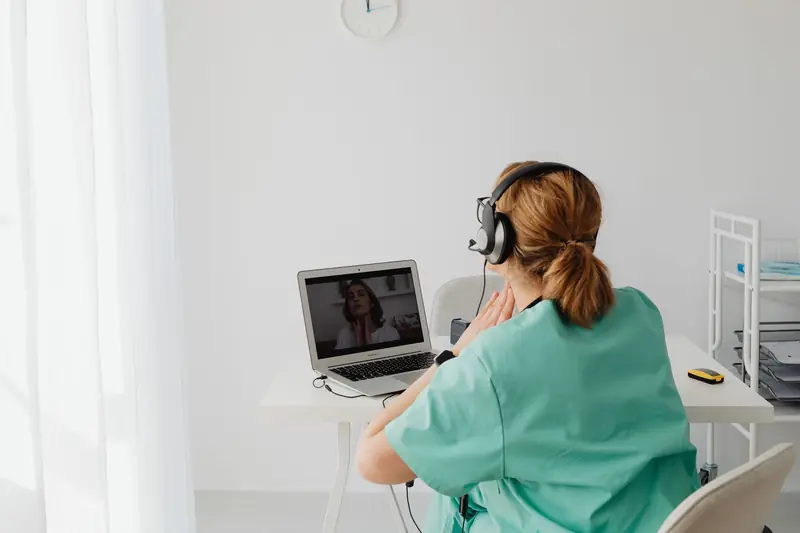
LSBME accepts telemedicine encounters by Louisiana-licensed physicians when they meet the in-person standard of care. Most New Orleans operators run a synchronous video Good Faith Exam for each new patient, renew it every 6–12 months for unchanged wellness protocols, and repeat it whenever a prescription drug is ordered. Festival group bookings need an individual exam per guest; see the GFE guide.
Sourcing, CDS licences and hurricane season
The Louisiana Board of Pharmacy permits pharmacies, including nonresident pharmacies shipping into the state, and regulates sterile compounding. Confirm that any 503A pharmacy filling patient-specific orders holds a Louisiana permit, and order stock vials and pre-mixed bags from an FDA-registered 503B outsourcing facility under the physician practice’s account.
Louisiana also requires a state controlled dangerous substance (CDS) licence, issued by the Board of Pharmacy, in addition to DEA registration for practitioners who handle controlled substances. Standard IV menus, including ketorolac and ondansetron, contain none, so most New Orleans IV businesses never need one.
Hurricane season runs from June through November and can cut deliveries and power for days. Keep a few days of crystalloids and core additives above normal par, know which storage units have battery or generator backup, and write a policy for discarding stock that drifted outside labelled temperature ranges during an outage. In-room mixing stays within USP <797> immediate-use limits.
Festival season, heat and hotel density
New Orleans has the most event-driven IV market in the South. Mardi Gras season, Jazz Fest in late April and early May, Essence Festival in July, the Sugar Bowl and a dense convention calendar fill French Quarter and CBD hotels, and recovery drips are the core product. Summer heat and humidity add a hydration season from June through September.
Baton Rouge demand follows LSU football Saturdays, the state government calendar and the petrochemical corridor’s large shift-working workforce. Heat is a supply-chain problem as well as a demand driver: fluids and heat-sensitive vials such as glutathione and NAD+ cannot ride all day in a parked vehicle in August. See the cold-chain guide.
All of Louisiana’s neighbours are compact states, so a New Orleans nurse can take a Mississippi Gulf Coast visit on a multistate licence, with the order coming from a Mississippi-licensed prescriber.
Major Louisiana mobile IV & infusion markets
New Orleans
- Lounge
- $155–$215
- Mobile
- $215–$315
- NAD+
- $360–$785
Mardi Gras, Jazz Fest and convention recovery in French Quarter and CBD hotels, plus summer heat hydration.
Parade routes close streets for days during Carnival, so mobile visits are routed around parade schedules.
Baton Rouge
- Lounge
- $150–$210
- Mobile
- $205–$300
- NAD+
- $355–$775
LSU game-day recovery, shift-worker hydration and state-employee wellness.
I-10 congestion across the Mississippi River bridge limits cross-river dispatches at rush hour.
Typical self-pay ranges per person; see the Louisiana drip estimator for group tiers and add-ons.
Book a mobile IV nurse or launch a practice in Louisiana
Patients and event hosts get licensed nurses with GFE screening arranged; clinics get matched with supervising physicians, GFE coverage and 503B supply.
Louisiana IV therapy FAQ
Who regulates IV hydration in Louisiana?
The Louisiana State Board of Nursing regulates RNs who administer IVs, the Louisiana State Board of Medical Examiners regulates the physicians who order and supervise, and LPNs fall under the Board of Practical Nurse Examiners.
Can an RN own an IV business in Louisiana?
An RN can own the management company, but the clinical practice is typically a physician-owned medical corporation, because Louisiana’s medical corporation statutes limit ownership to physicians.
Can a Louisiana APRN order IV drips?
Yes, under a collaborative practice agreement with a physician that covers the patients and drugs involved.
Is a telehealth exam valid for New Orleans hotel guests?
Yes, if a Louisiana-licensed prescriber performs a synchronous exam that meets the in-person standard of care, regardless of where the guest lives.
How much are Mardi Gras group drips?
Mobile drips in New Orleans commonly run $215–$315 per person before group discounts; festival weeks often carry minimums and limited time slots.
Sources & standards reviewed
- Louisiana Nurse Practice Act and LSBN rules Louisiana State Board of Nursing
- Louisiana Medical Practice Act and telemedicine rules Louisiana State Board of Medical Examiners
- Louisiana Pharmacy Practice Act Louisiana Board of Pharmacy
- Practical nurse scope of practice Louisiana State Board of Practical Nurse Examiners
- USP General Chapter <797> Pharmaceutical Compounding—Sterile Preparations USP
- Nurse Licensure Compact member states NCSBN
Reviewed under the IVConnection clinical and regulatory review policy. Report a correction to clinical@ivconnection.com.