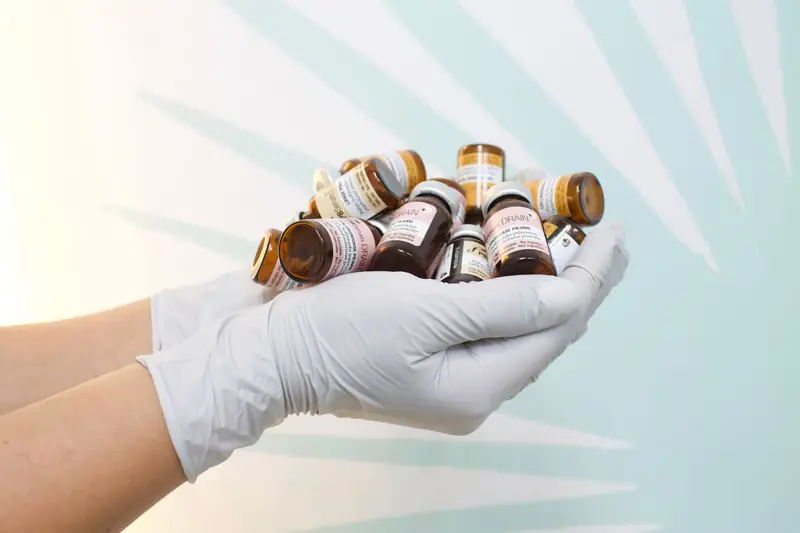
Exact standard formulation
| Ingredient | Typical dose | Mechanism of action | Osmolarity contribution |
|---|---|---|---|
| 0.9% sodium chloride (carrier) | 250–500 mL | Isotonic vehicle compatible with ascorbate and biotin | ≈ 308 mOsm/L baseline |
| Biotin (vitamin B7), compounded | Commonly 5–10 mg | Cofactor for carboxylases in fatty acid synthesis and amino acid metabolism; keratin link unproven outside deficiency | Negligible |
| Ascorbic acid (buffered) | 1–5 g | Cofactor that keeps prolyl and lysyl hydroxylase iron reduced, needed to form stable collagen | ≈ 10 mOsm per gram: +20 to +100 mOsm/L in 500 mL |
| B-complex 100 | 1 mL | Riboflavin, niacinamide, pantothenate and pyridoxine coenzymes | ≈ +2 to +5 mOsm/L in 500 mL |
| Dexpanthenol (B5), optional | 250–500 mg | Precursor of coenzyme A | ≈ +2 to +5 mOsm/L in 500 mL |
| Zinc sulfate, optional | 3–5 mg elemental | Cofactor in skin repair and keratinocyte function | Negligible |
| Glutathione (separate) | 600–2,000 mg slow IV push after the bag | Thiol antioxidant; shifts melanin synthesis toward lighter pheomelanin in lab studies | Not added to the bag |
The FDA biotin warning: troponin and thyroid tests
Many common lab tests use a biotin and streptavidin bond to capture what they measure. When a patient’s blood is full of free biotin, that biotin occupies the binding sites and the result goes wrong. The FDA issued a safety communication on this problem in 2017 and updated it in 2019, noting an increase in adverse event reports including one death linked to a falsely low troponin result.
The direction of the error depends on the assay design. In sandwich assays the result reads falsely low; in competitive assays it reads falsely high.
| Test | Typical assay design | Effect of high biotin | Clinical danger |
|---|---|---|---|
| Troponin | Sandwich | Falsely low | A heart attack can be missed in the emergency department |
| TSH | Sandwich | Falsely low | Together with a falsely high free T4, mimics hyperthyroidism or Graves’ disease |
| Free T4, free T3 | Competitive | Falsely high | Unneeded thyroid treatment or dose changes |
| hCG, PTH, some hormone panels | Mostly sandwich | Often falsely low | Missed pregnancy or parathyroid disease |
| Cortisol, estradiol, testosterone, vitamin D | Often competitive | Can be falsely high | Misread endocrine workup |
Assay manufacturers have reduced interference in some platforms, but you cannot know which method a given hospital uses. A responsible provider gives every biotin client a written card noting the dose and date.
Collagen, vitamin C and what the evidence shows
Collagen is a large protein; infusing it would be pointless and unsafe, and no reputable drip contains it. What a glow drip offers is cofactors. Vitamin C is required to hydroxylate proline and lysine residues in procollagen; without it, collagen fibers are unstable, which is why scurvy causes fragile skin and poor wound healing. In a well-nourished adult, however, oral intake already saturates tissue levels, and IV vitamin C has not been shown to improve skin aging in controlled trials.
Biotin deficiency causes hair loss, brittle nails and a scaly rash, and supplementation clearly helps those patients. True deficiency is rare, and evidence that extra biotin improves hair or nails in people with normal levels is weak. Glutathione shifts melanin production toward lighter pigment in laboratory studies, but clinical evidence for skin lightening is limited and inconsistent. Injectable glutathione is not FDA-approved for that use, and regulators outside the U.S., including the Philippine FDA, have warned against it.
The fair summary: a glow drip may support hydration and micronutrient status, and clients often like how they feel afterward, but it is not a proven treatment for hair loss, acne, melasma or skin aging.
Check the cause before you treat the symptom
Hair shedding and dull skin usually have identifiable causes, and some of them are missed if biotin is given before the blood draw.
| Complaint | Common underlying causes | Check first |
|---|---|---|
| Diffuse hair shedding | Iron deficiency, thyroid disease, telogen effluvium after illness, surgery, childbirth or rapid weight loss | Ferritin, TSH and free T4 (drawn before any biotin), CBC |
| Patchy or patterned hair loss | Alopecia areata, androgenetic alopecia | Dermatology evaluation |
| Brittle nails | Iron deficiency, thyroid disease, frequent water exposure | Ferritin, thyroid tests |
| Dry, dull skin | Dehydration, eczema, hypothyroidism, low essential fatty acid intake | History and thyroid tests |
| Hair loss after GLP-1 or bariatric weight loss | Telogen effluvium, protein, iron or zinc shortfall | Ferritin, zinc, protein intake review |
Carrier fluid selection and osmolarity
Normal saline is the standard carrier because it is compatible with ascorbate, biotin and B vitamins in the same bag. Lactated Ringer’s can be used at low ascorbate doses, but saline keeps compatibility predictable. Sterile water has no role here: at these vitamin C doses it would leave the bag hypotonic and risk hemolysis. See normal saline vs Lactated Ringer’s for the full comparison.
With 5 g of ascorbic acid in 500 mL of saline plus B-complex and biotin, the finished bag is roughly 410–420 mOsm/L, well tolerated in a forearm vein. Shrinking the bag to 250 mL with the same additives pushes it past 500 mOsm/L, which is where clients start to feel burning.
Saline, ascorbate, biotin and B-complex are four components, over the three allowed for USP <797> immediate-use mixing. Compounded biotin and multi-ingredient beauty blends should come from a 503A or 503B pharmacy with a certificate of analysis.
Infusion rate and duration
A 250–500 mL glow bag usually runs over 30–45 minutes through a 22G–24G catheter. Glutathione follows as a 5–10 minute slow push or 15-minute saline piggyback, flushed before the catheter comes out. Many clinics give biotin as a separate slow push to keep the dose traceable.
- Slow the rate if the client reports burning along the vein; check the site before continuing.
- Record the biotin dose and time on the discharge card for future lab draws.
- Observe for flushing, itching or wheeze after glutathione; inhaled glutathione is known to provoke bronchospasm in some people with asthma, and although reactions to IV pushes are uncommon, nurses watch for them.
Lounge vs mobile pricing and bridal groups
Glow drips run about $175–$250 in a lounge and $225–$325 mobile. Glutathione and biotin pushes are often sold as add-ons on top of a Myers-style base. Bridal parties and pre-event groups book this drip more than any other, so group tiers apply: 10% off for 3–5 guests, 15% for 6–9 and 20% for 10 or more, each guest with her own Good Faith Exam.
Estimate base price, pushes and group size in the configurator. If you only want glutathione, a push alone is cheaper; see the glutathione IV push page.
Who it is for and who should skip it
Reasonable candidates are healthy adults who understand the limited evidence, have no upcoming blood tests, and want hydration with vitamins before an event. Anyone with unexplained hair loss should have ferritin and thyroid tests drawn first.
Skip it if you have upcoming thyroid, cardiac, fertility or hormone labs, are pregnant or trying to conceive and relying on hCG tests, have kidney stones or kidney disease (vitamin C oxalate risk), have poorly controlled asthma (glutathione), or are being evaluated for chest pain.
Lounge vs. mobile price benchmarks
| Setting | Typical price | What is included | Notes |
|---|---|---|---|
| In-clinic lounge | $175–$250 | Biotin, vitamin C 1–5 g, B-complex in 250–500 mL NS, RN monitoring | Often built on a Myers-style base |
| Mobile concierge | $225–$325 | Same bag at home or hotel | Popular before weddings and events |
| Bridal or event group | 10–20% off per person | Multi-chair setup, staggered starts | Two RNs typical for 5–10 guests |
| Biotin push add-on | +$25–$40 | 5–10 mg slow push | Triggers the lab interference warning |
| Glutathione push add-on | +$35–$60 | 600–2,000 mg after the bag | Not FDA-approved for skin lightening |
Prices are national self-pay medians; the drip configurator applies your state’s regional index, add-ons and group tiers.
Mandatory screening & contraindications
Required before the infusion
- Good Faith Exam with history, medications and allergies documented
- Upcoming lab tests (thyroid, troponin, hCG, hormones) identified and scheduled before any biotin
- Hair loss history with ferritin and thyroid results drawn before biotin when indicated
- Kidney stone and renal history (ascorbate oxalate risk)
- Asthma history and any prior reaction to glutathione
- Written biotin card given at discharge with dose and date
Contraindications & stop signals
- Absolute: active chest pain workup or a cardiac evaluation expected within days (troponin interference)
- Absolute: thyroid or hormone testing scheduled within about 72 hours
- Absolute: known allergy to any component or preservative in the compounded vials
- Relative: pregnancy, trying to conceive, or breastfeeding
- Relative: kidney stones or kidney disease
- Relative: asthma with history of bronchospasm to glutathione
- Relative: thyroid disease managed by lab-guided dosing
Configure this protocol for your group or event
Choose mobile or lounge, volume, add-ons and participants; the estimate, safety flags and printable brief update instantly and carry into your booking request.
Where this protocol is in demand
Medspa density, destination weddings and bachelorette travel make Los Angeles, Miami, Manhattan, Dallas, Las Vegas, Scottsdale, the Jersey Shore and Atlanta the strongest beauty drip markets.
For clinics offering this drip: FDA Section 503A vs 503B Outsourcing Facilities: Sourcing Sterile IV Nutrients Legally · Running Group IV Events, Corporate Wellness Days & Drip Parties · USP <797> Sterile Compounding Compliance and Immediate-Use Rules for IV Hydration Clinics.
Frequently asked questions
Does a beauty drip contain collagen?
No. Collagen is a large protein and is not infused. The drip provides vitamin C and other cofactors your body uses to make its own collagen, which helps mainly if you are short on them.
How long should I wait after biotin before blood tests?
Many labs advise at least 72 hours after high-dose biotin, and longer if you have kidney problems. Always tell the lab or emergency team that you received biotin and when.
Will biotin make my hair grow?
It helps people who are truly deficient, which is uncommon. For most people with hair shedding the cause is iron, thyroid, stress or hormones, so get those checked before paying for biotin.
Does IV glutathione lighten skin?
Evidence is limited and inconsistent, and injectable glutathione is not FDA-approved for skin lightening. Some regulators abroad have warned against it.
Can I get a glow drip the week before my wedding?
Yes, if your Good Faith Exam is clear, and many bridal parties do. Schedule any blood tests before the drip because biotin can distort results for several days.
Is the beauty drip HSA or FSA eligible?
Usually not. Cosmetic purposes are generally excluded under IRS rules, unless a clinician documents treatment of a diagnosed deficiency.
Sources & standards reviewed
- FDA Safety Communication: Biotin (Vitamin B7) Interference with Laboratory Tests (2017, updated 2019) U.S. Food and Drug Administration
- Biotin: Health Professional Fact Sheet NIH Office of Dietary Supplements
- Vitamin C: Health Professional Fact Sheet NIH Office of Dietary Supplements
- IRS Publication 502: Medical and Dental Expenses Internal Revenue Service
- USP General Chapter <797> Pharmaceutical Compounding—Sterile Preparations USP
Reviewed under the IVConnection clinical and regulatory review policy. Report a correction to clinical@ivconnection.com.